
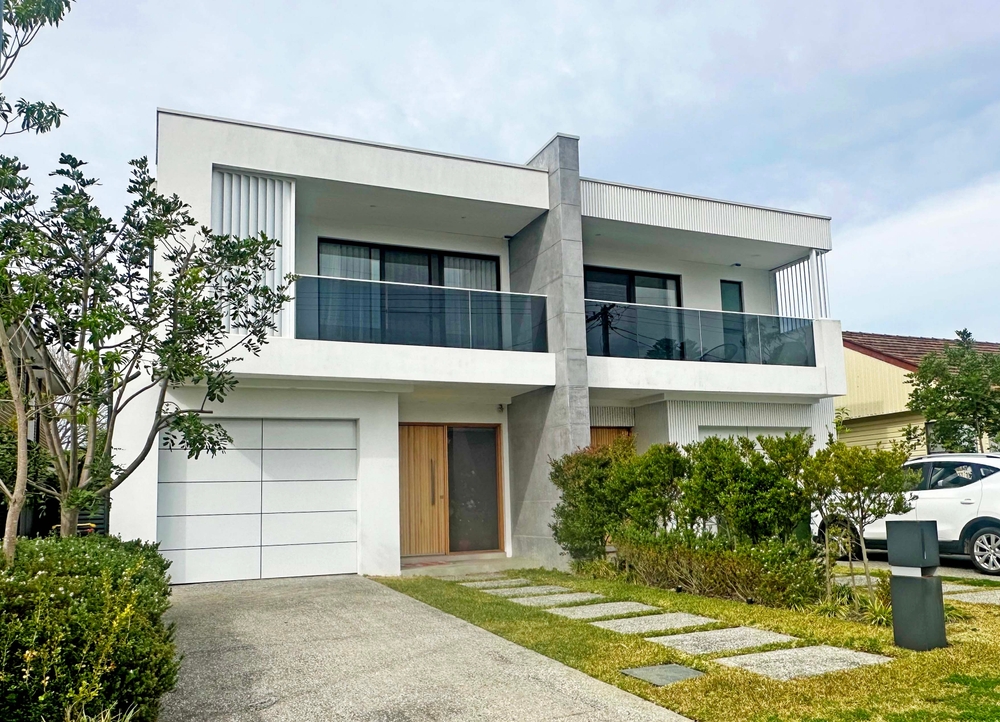
Do I Need a New Certificate of Occupancy for a Two-Family Home in NYC?
You found a two-family home in Brooklyn, the listing called it a two-family, and then your refinance stalls because the document on file with the city says one-family. That scenario plays out across Mill Basin, Canarsie, Bayside, and Staten Island every year. A certificate of occupancy is the record that settles what your home legally is, and a gap between what it says and how the home is actually used can quietly derail a sale, a refinance, or even your insurance.
When does a two-family home in NYC need a new certificate of occupancy?
A two-family home needs a new or amended certificate of occupancy whenever an alteration changes its use, egress, or occupancy — including converting a one-family home into two units. If your existing certificate already lists two-family use and matches the home’s actual layout, you do not need a new one.
Three changes trigger the requirement: a change in use (one category to another), a change in egress (how people enter and exit), and a change in occupancy (how many independent units the building holds). Turning a single-family house into a two-family house checks the occupancy box because you add a second independent dwelling unit, where the records show one.
Most owners never face this: if your home already carries a two-family certificate and the layout matches it, you can occupy it and later sell it without filing anything new, since the certificate has no expiration date. The trouble starts when the building drifts from the paperwork — a basement that becomes a third apartment, or a one-family quietly split in two. Situations that commonly call for a new or amended certificate include:
- Converting a one-family house into a two-family home, or a two-family into a three-family
- Adding a separate dwelling unit in a basement, cellar, attic, or garage
- Combining or subdividing units in a way that changes the number of dwellings
- Any alteration that changes how occupants exit the building in an emergency
What is a certificate of occupancy, and how can you check yours?
A certificate of occupancy is a document stating a building’s legal use and permitted occupancy. You can look yours up for free through the Department of Buildings’ online records using the property address or Building Identification Number, or request a copy from your borough’s Buildings office if the home predates online filing.
Issued by the New York City Department of Buildings, it records the building’s use group, occupancy classification, the number of dwelling units permitted on each floor, and the maximum occupant load.
Checking yours is straightforward. The Department stores certificates in its online systems, searchable by property address or by Building Identification Number (BIN), and for most homes built after the late 1930s, you can pull it in minutes. If none appear online, the building may predate the requirement, and your borough’s Buildings office (in Brooklyn or Queens, for example) can confirm what records exist. A certificate of occupancy tells you:
- The legal use of the building, such as a one-family or two-family dwelling
- The number of dwelling units and how they are distributed by floor
- The occupancy classification and permitted occupant load
- Whether the certificate is final or temporary
Is a two-family home considered a multiple dwelling in New York?
No. Under New York’s Multiple Dwelling Law, a building occupied by one or two families is a “private dwelling,” while a “multiple dwelling” means three or more families living independently. A two-family home is a “two-family private dwelling,” which keeps it outside the stricter rules that govern apartment buildings.
The distinction changes which rulebook applies. The New York Multiple Dwelling Law draws a bright line: one or two families is a private dwelling, while three or more independent families is a multiple dwelling. Your two-family home sits on the private-dwelling side.
That works in your favor. Multiple dwellings carry heavier obligations — registration with the Department of Housing Preservation and Development, stricter fire-safety standards, and ongoing inspections that private dwellings largely avoid. The line matters most when an owner crosses it: adding a third unit converts the building into a multiple dwelling and pulls it under that entire scheme. The jump from two units to three is far larger than most owners expect:
- One or two families: a private dwelling, with a lighter regulatory burden
- Three or more families: a multiple dwelling, where HPD registration and stricter safety rules apply
What counts as a change of use or occupancy in a two-family conversion?
Adding a second kitchen, creating a separate entrance, splitting utilities, or dividing a home into independently occupied units all signal a change in occupancy. Under the New York City Administrative Code, that change requires an Alteration Type 1 filing and a new or amended certificate of occupancy before the additional unit is legal.
The rule is direct. Under Section 28-118.3.1 of the New York City Administrative Code, a building altered to change from one occupancy group or zoning use group to another cannot be occupied until the Department of Buildings issues a certificate of occupancy for the new use, and adding a second dwelling unit is exactly that change.
Work that changes occupancy is filed as an Alteration Type 1 (an Alt-CO in the current system), the category for jobs that produce a new or amended certificate. Cosmetic upgrades like a new kitchen layout or an added bathroom inside an existing unit fall under a lighter Alteration Type 2 and leave the certificate untouched. The Department looks for the physical signatures of a separate dwelling unit:
- A second kitchen or full cooking facilities
- A separate exterior entrance or a lockable internal division
- Independent gas and electric metering
- A separate bathroom and sleeping areas serving the added unit
What if your older Brooklyn or Queens home never had a certificate of occupancy?
Buildings constructed before 1938 were not required to have a certificate of occupancy. If yours doesn’t have one, your borough’s Buildings office can issue a Letter of No Objection confirming the building’s legal use — including legal two-family use — provided that use was lawfully established and no violations are pending against the property.
Much of New York City’s two-family housing was built before the modern certificate requirement took effect on January 1, 1938. Brownstones, rowhouses, and frame homes across Bedford-Stuyvesant, Ridgewood, and older parts of Staten Island often have no certificate on file at all — perfectly legally.
For these buildings, the Department of Buildings can issue a Letter of No Objection, which confirms the legal use of a property that never needed a certificate and can establish lawful two-family use going back decades. It is not a certificate of occupancy, but lenders and title companies routinely accept it as evidence of legal use. The exemption holds only while use, egress, and occupancy stay unchanged since 1938 — a later alteration ends it. An older home still needs attention when:
- The building was altered or converted after 1938 without updated approvals
- The current use differs from the building’s documented historical use
- A lender or title company requires documented proof of legal two-family use
What happens if a two-family home was illegally converted?
If a home was split into an extra unit without permits and a matching certificate of occupancy, the Department of Buildings and HPD can issue violations, daily civil penalties, and even vacate orders. Owners generally must either legalize the work through proper filings and inspections or restore the home to its lawful configuration.
An illegal conversion happens when the physical building outruns its certificate — a two-family on paper operating as a three-family, or a one-family with an extra basement unit. Because the certificate has not caught up, that added space is, in the city’s eyes, not legal living space.
The consequences fall on the owner. The Department of Buildings and the Department of Housing Preservation and Development can issue violations, impose civil penalties that accrue for each day the condition continues, and — where conditions are hazardous — order the unlawful space vacated. Unpermitted units often fail basic safety standards for fire separation, light, air, and egress. Warning signs include:
- More units in operation than the certificate of occupancy lists
- A basement or cellar apartment with no record of permits
- Separate entrances or meters that do not appear in the building’s filings
- Open Department of Buildings violations tied to work without a permit
How do you get a new or amended certificate of occupancy in NYC?
Legalizing a two-family layout starts with confirming the zoning district permits two-family use. A licensed architect or engineer then files plans with the Department of Buildings, obtains permits, completes the required inspections, and closes out the job, ending in an amended certificate of occupancy. The process usually takes months, not days.
Bringing a two-family into compliance follows a defined path, and it almost always involves a design professional working alongside your attorney. The sequence generally runs:
- Confirm the zoning. Check that the property’s zoning district permits two-family use; the city’s ZoLa tool maps this by address.
- Document the conditions. A licensed architect or professional engineer measures the as-built layout and prepares plans.
- File the application. The plans go to the Department of Buildings as an Alteration Type 1 (Alt-CO).
- Obtain permits and do the work. Construction must meet code for egress, fire separation, ceiling height, and light and air.
- Pass inspections. The Department of Buildings inspects the completed work, and any open violations are resolved.
- Receive the amended certificate. Once everything clears, the Department issues the updated certificate of occupancy.
Minor work that does not change occupancy ends instead with a Letter of Completion. Either way the timeline runs in months, which inspection backlogs can stretch further. Starting before you list — not under the pressure of a pending sale — keeps you in control of cost and schedule.
How does a certificate of occupancy affect buying or selling a two-family home?
A standard New York contract of sale requires the seller to deliver a certificate of occupancy matching the home and its structures. A mismatch can stall the closing, prompt an escrow holdback, and block financing, because lenders and title companies require the legal use to match the certificate. A buyer who closes anyway inherits the problem.
A certificate quietly becomes the most important document in a deal. A standard New York contract of sale obligates the seller to deliver a certificate of occupancy covering the home and any added structures, such as a deck or converted garage. When the seller cannot, the contract typically requires obtaining it before closing or holding money in escrow until it is resolved.
The gap rarely stays hidden once a home hits the market. The buyer’s title company runs a municipal search that surfaces certificate discrepancies and open permits, and the lender compares the home’s actual use to the certificate on file. Lenders generally will not fund a loan when the two do not match, and a unit missing from the certificate can even void a property insurance policy. A buyer who finds the problem can walk away, negotiate a credit or escrow holdback, or take title and fix it later — then inherit the same obstacle at resale. Reviewing the certificate of occupancy early, before listing or making an offer, keeps a small discrepancy from becoming a closing-day crisis.
Protect Your Two-Family Home Before a Paperwork Gap Costs You
A certificate-of-occupancy problem rarely fixes itself, and it usually surfaces at the worst moment — mid-sale, mid-refinance, or after you have closed. At Gerard Law Firm, we help homeowners and buyers across Brooklyn, the rest of the five boroughs, Long Island, and Westchester confirm what their two-family home legally is, plan a conversion the right way, and keep a closing on track when the certificate and the property do not line up. We handle residential real estate matters on a flat-fee basis, so you know the cost up front, and your initial consultation is free. Call Gerard Law Firm at (917) 847-7923 to speak with Dave Gerard before a small gap becomes a costly delay.
Frequently Asked Questions
Does a finished basement or cellar apartment count as a separate unit on the certificate of occupancy?
Often, yes. If a basement or cellar has its own kitchen, bathroom, and entrance and is occupied independently, the Department of Buildings generally treats it as a separate dwelling unit that must appear on the certificate. Many such spaces also cannot legally be used as living space because of ceiling-height and egress rules.
Can I sell my NYC two-family home if its certificate of occupancy still says one-family?
You can list and sell it, but the mismatch will surface during the buyer’s title and municipal search and can stall the closing. The buyer’s lender may refuse to fund until the records match. Most sellers either correct the certificate before listing or negotiate an escrow holdback to resolve it.
Will a mortgage lender approve a loan if the home’s actual use doesn’t match the certificate of occupancy?
Frequently not. Lenders generally require a property’s legal use to match its certificate of occupancy before funding a purchase or refinance. A two-family used as a three-family, or a one-family with an unpermitted second unit, can hold up the loan until the discrepancy is resolved through the Department of Buildings.
How long does it usually take to obtain an amended certificate of occupancy in New York City?
Timelines vary with the scope of work and the borough office’s workload, but an amended certificate typically takes several months rather than weeks. The process runs through filing plans, obtaining permits, completing construction to code, passing inspections, and clearing any open violations before the updated certificate issues.
After buying a two-family home, who is responsible for an existing certificate of occupancy problem?
Once you take title, the problem usually becomes yours. If a previous owner converted or altered the home without updating the certificate, the new owner generally has to resolve it — which is why reviewing the certificate of occupancy before closing matters so much. Catching it early lets you negotiate who pays.
Is a Letter of No Objection enough to confirm my two-family home is legal?
For many pre-1938 buildings, yes. A Letter of No Objection from your borough’s Buildings office confirms the legal use of a building that never needed a certificate of occupancy. It is not a certificate itself, but lenders and title companies often accept it as proof of legal two-family use, provided no later alterations changed the building’s use, egress, or occupancy.



Leave a Reply
Want to join the discussion?Feel free to contribute!